flock camera awareness
Mass surveillance is on your street.
And most people have no idea.
We are not deflock. Please read.
before you read further
Go to maps.deflock.org and search your address. See exactly which Flock cameras are within a mile of your home — the intersections they cover, the roads they watch. Then come back.
Everything below will mean a lot more once you know how many there already are around you.
what is flock safety?
Flock Safety is a private, for-profit company — not a government agency, not a police department. They market their cameras as Automated License Plate Readers (ALPRs) — a neutral-sounding tool for solving crimes. That's the pitch. In practice it's a mass surveillance network, licensed to police, HOAs, and businesses on a subscription.
Every time you drive past one of their cameras, it photographs your car, reads your plate, and logs your location and time into their private database. That's what they admit to. They call it "just metadata" and claim it's deleted after 30 days — but even taking those claims at face value, enough metadata builds a precise map of your life: your job, your doctor, your church, your friends, how often you see them. And the 30-day limit disappears the moment anyone flags your plate. What they actually do with the data beyond that is not public knowledge — they're a private company with no obligation to tell you.
Beyond license plates: Flock's Condor PTZ cameras use AI auto-tracking to zoom in on pedestrians — including to capture phone screen activity. Their video cameras don't just log where you drive. They watch what you're doing.
The police are just subscribers. Flock is the one collecting your data, storing it, and deciding who gets to see it. A private company — not elected, not accountable to you, not bound by the same rules as law enforcement — owns a record of everywhere you've driven. And they sell access to it. You never consented to this. There's no opt-out.
they're everywhere
- 90,000+ cameras deployed across the US as of 2025
- 20 billion vehicle scans per month
- 6,000+ municipalities — police departments, sheriffs, city governments
- 49 states — if you drive in America, you're in the network
And it's not just police. Flock sells to HOAs, private businesses, schools, and neighborhoods. The camera logging your plate might be paid for by your neighbors' dues — and feeding directly into a law enforcement database they didn't know they were building.
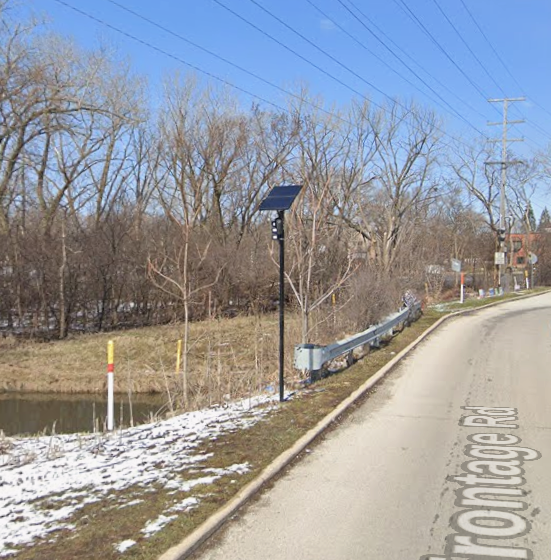
How to spot one: black housing, roughly the size of a large book, mounted about 8 feet up on a dedicated pole — often near a neighborhood entrance, intersection, or exit ramp. Almost always has a small solar panel attached and a cellular antenna. The cameras are angled low toward the road, aimed at plate height, not elevated like traffic cameras. Sometimes marked with a small Flock Safety logo. See more at deflock.org (independent site, not affiliated with this one).
claims vs. reality
- "Data is only used for solving crimes." The network is queried millions of times per year — including minor infractions, civil matters, and agencies with zero oversight requirements.
- "We've never been hacked." In January 2026, dozens of Flock cameras were found wide open on the internet — no password, no protection. Anyone could watch live footage and scroll through 30 days of archived video. Flock only fixed it after reporters found it.
- "We don't sell your data." Flock shares across its entire subscriber network. The HOA camera on your street feeds the same pool queried by federal agencies, out-of-state departments, and private security firms.
- "Retention periods are short." Default is 30 days — but agencies can extend it, and once your plate is tied to an investigation, that record can be kept indefinitely.
- "It's just a license plate." A plate plus time plus location is a movement record. Enough of them maps your daily routine, workplace, who you see, and where you go for medical care.
- "HOA cameras are community-owned." Most HOA Flock cameras feed directly into law enforcement networks. It's police surveillance — billed to your HOA dues.
- "It's legal because the town installed it." Municipalities pay for and install the cameras — that's the legal hook. Because a public entity contracted the service, Flock sidesteps rules that would apply to a private company collecting this data on its own. The towns install it. Flock keeps the data.
in their own words
Flock Safety CEO Garrett Langley, in a September 2025 Forbes video interview, on the people who map his cameras:
"Unfortunately, there's terroristic organizations like DeFlock, whose primary motivation is chaos."
"They are closer to Antifa than anything else."
In December 2025, he emailed every law enforcement client calling critics "activists trying to let murderers go free" who want to "normalize lawlessness." Two police chiefs who received it pushed back — one called it "democracy in action," another called the email "unprofessional."
Flock also sent a cease-and-desist to deflock.org demanding they drop the name. The EFF represented deflock.org. They refused.
find cameras near you
Independent tools — not affiliated with this site.
- deflock.org Community map of reported Flock camera locations.
- Atlas of Surveillance — EFF Database of surveillance tech deployed by law enforcement across the US.
- OpenStreetMap Community-tagged surveillance cameras worldwide, including ALPRs.
what you can do
- File a public records request. Ask your local PD how many Flock cameras they run, who can query the data, and how long it's kept.
- Talk to your HOA. Ask to see the data-sharing agreement. Most residents don't know one exists.
- Contact your representatives. Push for retention limits, audit logs, and warrant requirements.
- Share this page. Most people have never heard of Flock Safety.